With Bognor Regis gearing up for its annual Blake-inspired arts festival tomorrow, Blakefest director Rachel Searle shares just a few of the highlights. Blakefest has become a unique cultural experience by the sea, featuring international art, poetry, political discussion panels. As Rachel says, "in all honesty, it's very pleasingly different and eclectic in its approach, and perfectly mirrors the creative magpie approach, showcasing the whole spectrum of art forms."
The presence of William Blake as a resident in my hometown of Felpham has always been a catalyst for me wanting to create a cultural legacy in Bognor, that both honours him but also celebrates new art and contemporary visionary artists, as well as bringing in artists that embrace his rebel spirit and political resistance. We are really excited by the acts we’ve managed to secure this year and the breadth of the programming.
BlakeFest, part of the Big Blake Project, has its roots in Blake’s vision of Beulah, perhaps best understood as a window on earth into heaven itself: In Felpham, Blake penned “Heaven opens here on all sides her golden gates” and the words to Jerusalem. In the “spirit of Blake’s poetic genius”, BlakeFest is a synthesis of original music, poetry and audio-visual art and includes talks on issues of ‘the imagination’ and social justice. Our over-riding aim for BlakeFest is to be an agent of regeneration in Bognor Regis through the exploration and celebration of William Blake.
Before the main programme
While the main programme starts tomorrow, there is a question-time style panel debate tonight. Building Jerusalem is a public meeting, being held as part of BlakeFest 2018 at Chichester University, involving talks and a panel discussion exploring the relevance of William Blake’s poem/hymn Jerusalem, and wider philosophy, to the Israeli-Palestinian conflict and Britain’s potential role in finding a solution to it. The event is an inter-faith and truth-seeking initiative and there will be no promotion of ideological or religious views that favour one faction of humanity over others.
Building Jerusalem was inspired by the community poem – ‘We’ll Do It’ – crafted by Stella Bahin during her time as BlakeFest’s Poet-in-Residence. For me,’We’ll Do It’ reveals the heartbeat of Blake’s Jerusalem in the people of Bognor Regis today. With Blake’s own visions of both Beulah and Jerusalem, the idea of an inclusive inter-faith panel discussion emerged. This was followed by a sobering trip to Jerusalem and the West Bank. The highlight of the trip was meeting Dareen Tatour who used her precious last hours of freedom to give us a tour of her beloved Nazereth.”
Blakefest: music, poetry and talks
Our daytime programme starts at midday on Saturday with local and national talent. And the South Downs Poetry Festival has converged with Blakefest this year, curated by local bard Barry Smith — placing jazz and poetry alongside each other, weaving in and out of the musical acts throughout the day.
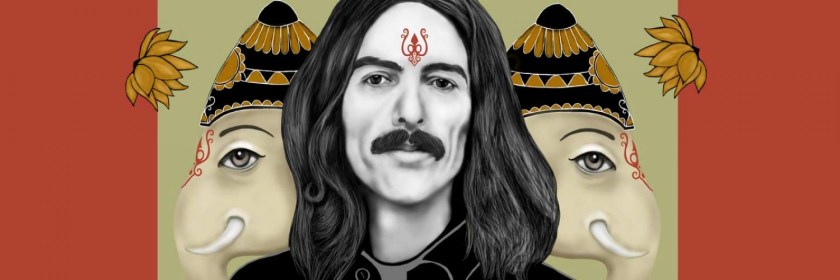
In keeping with Blake’s anti-establishment spirit of personal freedom, the acclaimed 1970s pop icon Lene Lovich headlines in the evening, with second headliner the All Things Must Pass Orchestra; led by Alex Eberhart, this is a celebration of the music of visionary Beatle, George Harrison.
Mikey B Georgeson has been a major mover and shaker with BlakeFest, in capacities ranging from musician, exhibition curator, speaker and generally inspiring those around him. This year, he brings his Silent Disco, an art installation called An Actual Occasion and then performing as Mr Solo: an eclectic range of original, very individual, material taking inspiration from Bowie, the Beatles and Blake. A riveting and highly eloquent performer, this promises to be another highlight of BlakeFest 2018.
Vincent Gray will be unveiling and available to discuss an exciting possible sculpture for Bognor Regis, Albion Rose. Vincent recently completed a Keats sculpture now permanently installed in Eastgate Square, in Chichester.
The evening event at the Alexandra Theatre is being opened by a talk on Blake and the 60s by the accessible and scholarly Tobias Churton. The internationally-recognised and respected Churton, a very erudite orator, will be shedding light on Blake’s enduring contribution to our culture, focusing on the resurgence of his popular influence through the 1960s which still resonates across the arts, philosophically and spiritually.
Jamie Leeming will headline an afternoon set of live music sessions. He’ll also be accompanying the Southdown Festival Poets, culminating in Sasha Dugdale’s vocalising of Catherine Blake. Joy: Poetry & Jazz features Sasha Dugdale, Niall McDevitt, Naomi Foyle, Barry Smith and Jamie. The genre-crossing compositions of Jamie Leeming — with strong roots in the jazz tradition, but with folk-influenced imagery and textures — meet the Blake-inspired words of South Downs poets!
Ciaran O’Driscoll and Margaret Farrelly with John Davies (aka Shedman) can be trusted to bring their lyrical Celtic music and humour to the afternoon. Probably the biggest contemporary name in Irish literature, Ciaran has won several awards and formally recognised by the Irish Arts Council as making an outstanding contribution to art and literature.
Alongside the wonderful musical lineup, free Silent Disco and performance poetry, there will be a graffiti art exhibition and bitesize talks on: Graffiti, Ginsberg and Blake; Blake and the Divided Brain; Female Revolutionary Figures.
There is also an event in William and Catherine Blakes’ Cottage on Sunday and a guided walk.
Bognor Regis is a town poised at the brink of regeneration following similar projects in Margate, Hastings and Liverpool, with proposals including a major ‘William Blake Theatre’ — channelling local culture and arts to enrich their current heritage and touristic allure.
Notes
BlakeFest 2018 is taking place over the weekend 14th-16th September with the main focus being the all-day Live Music Festival on Saturday 15th at The Regis Centre/Alexandra Theatre from noon onwards. The Fringe Events on Friday and Sunday have limited numbers and payable separately.
The event is sponsored by Chichester University & Chichester Observer
You can find more information and booking details at theBlakefest website. This video shows events from last year’s festival.
Finding Blake gratefully received an enquiry from Eric Nicholson via our Contact page, offering us a glimpse of his draft book on William Blake and Personal Awakening. Eric is a practising Zen Buddhist and a retired art teacher. We wanted to share some of his insights and reflections with our readers; the book should appeal to anyone interested in Blake and to readers interested in personal growth. Here is an extract from the introduction and the first chapter.
…
No tree, it is said, can grow to heaven unless its roots reach down to hell.
– Carl Jung, Aion: Researches into the Phenomenology of the Self (1951)
My approach in this book is to look at Blake’s twenty-two illustrations of the Book of Job as a narrative describing the despair and subsequent rebirth and redemption of Job, and to apply the ideas to our own spiritual journeys.
William Blake and Personal Awakening
We will, therefore, be travelling into some very dark places and using ‘self-inquiry’ in the manner of Socrates’ imperative ‘know thyself’. If, like me, you have sometimes felt that your life has consisted of one mistake after another, this might be the book for you. If you have ever suffered from depression or acute anxiety and sensed that the experience was existential and spiritual, rather than simply a medical or pathological problem, you may find some pointers in my analysis. Needless to say, to get the most out of the ideas here we will have to be ruthlessly honest with ourselves and be prepared to dig under the surface of our personas. That is the only requirement; you do not need to accept any system, any religion, or anyone’s ideas about God. Our journey will be a shared journey where I hope you will engage with the arguments. Starting at the title page engraving, Blake will be our guide.
I am not a sage. I am just an ordinary human being who struggles with depression and to whom the question of ‘peace of mind’ is the most important question in the world. Perhaps you too are interested in this question. If so you may find Blake’s Job speaks to you as it does to me.
There are many illuminating books and commentaries about Blake’s system and about the Job engravings. However, this book is not a straightforward commentary on Blake’s Illustrations of The Book of Job – his actual title for the series.Instead, I interpret Blake’s series of illustrations in spiritual terms relevant to life today. I relate his ideas to Buddhist thought as Soto Zen Buddhism is the practice I have first hand experience of. The correspondences between the two are remarkable.
Suffering and the end of suffering
The historical Buddha said, I teach only one thing; suffering and the end of suffering. ‘Dukkha’ was the Sanskrit word traditionally used and ‘suffering’ is a rather crude translation of its meaning; ‘an unavoidable, universal, unsatisfactory element to corporeal life’ is a better way of thinking about it. Mick Jagger’s lyrics in Satisfaction also describe dukkha in a popular context.
William Blake’stwenty-two engravings of the Book of Job are the culmination of a forty-year preoccupation with the subject. In the mid-1780s he completed a drawing showing Job’s wife and his friends. This was followed by nineteen stunning watercolours illustrating the whole narrative of the biblical Job filtered through Blake’s unique vision.
In 1821, John Linnell borrowed the watercolours and traced the series, which Blake then coloured. Two years later Linnell commissioned the engravings, which Blake did on copper plates, using a conventional intaglio technique. (I have examined the set in the British Museum and they are in such a pristine condition that incised lines the width of a human hair are still unblemished.) Linnell gave an advanced payment of £100 and added £50, and other sums, some time later. They were dated 1825 but only printed as a set in 1826, one year before Blake’s death. Considering the small size of the black and white prints (8.4 x 6.5 inch) the richness of both the pictorial elements and the intellectual content is astonishing. It is no wonder that these final Job engravings, done near the end of Blake’s life, are so deeply felt and masterful in technique.
To our twenty-first century eyes Blake’s visual work can appear at first sight to be archaic and naively anthropomorphic. (His use of theatrical gestures in his work may have been partly derived from the theatre of his day, and his pastel colouring from other Georgian contemporaries.) However, once we get past the seeming barrier of anthropomorphism we can appreciate that, in fact, his work is deeply spiritual, and at the same time, humanistic and a much-needed counterbalance to scientific materialism. The fact that nearly all of his visual representations, done throughout his life, include human figures is deeply significant, given that today the stature of the individual has diminished so alarmingly: globally, with shopping malls full and places of worship emptying, ‘homo economicus’ seems to have totally replaced ‘homo spiritualis’.
Title page of the Illustrations of the Book of Job William Blake, 1826 Source: Wikipedia / The Blake Archive www.blakearchive.org/
A Dragoning path under the sun
When I first went to a Buddhist monastery I was somewhat surprised, and fascinated, that after seated meditation we did walking meditation by walking slowly and silently in a circular fashion. During ceremonies we also walked in a ‘dragoning’ path as we circumambulated the meditation hall. The monks explained that these movements were always in a clockwise direction. On reflection I realised that this is the same direction as the sun’s path through the sky and therefore there is a feeling of ‘rightness’ and that the counter-clockwise movement would seem somehow unnatural.
Blake engraved his seven angels moving clockwise in this title page where he has both Hebrew and Gothic lettering. Foster Damon, in his Blake Dictionary, explains that the bottom-most angel is Shaddhi who is looking backwards as if mid-way in the pilgrimage of regeneration. The leading angel with his face averted is Jesus. Is his face averted to show a spiritual inwardness or is it because he has not yet been incarnated? He is, anyhow, unambiguously, the leading angel, and so is symbolic of that urge within each of us to find spiritual truth. (Blake did not believe in bodily resurrection or in the conventional doctrines espoused by institutional Christianity. However, his whole system describes in detail continuous spiritual rebirth which, incidentally, has many non-Christian antecedents.) In Buddhism this desire for truth, or spiritual aspiration, is called Bodhicitta.
Joseph Wicksteed, in his masterful book Blake’s Vision of the Book of Job, is percipient about the sun in relation to the title page:
We are, in this book … concerned not so much with the visible part of the current, which carries the sun … to his height in the south and down again into the west, but with the part below the horizon, by which the unseen sun is taken back through the underworld, to reappear again in the east.
The treadmill
There has always been this symbolic view of rebirth concerning the sun but the circular motion can also symbolise the repetitive nature of human existence. In today’s world, with its treadmill of consumerism, we may all too easily find ourselves repeating Macbeth’s despairing lines: ‘Tomorrow and tomorrow and tomorrow, creeps in the petty pace from day to day / until the last syllable of recorded time.’ And remember, Shakespeare’s eponymous protagonist wonders at the end of the speech if, ‘life is a tale told by an idiot, signifying nothing.’This is Blake’s Ulro or Eternal Death, a state in which some of us might live out our lives when we are content to be passive and unreflecting; content to go along with consensus thinking. It is the ‘unconscious’ life described by Eckhart Tolle in The Power of Now. The whole of Blake’s system is really a roadmap on how to avoid this bleak state of affairs and approach circumstances from a receptive, compassionate position.
Job’s Evil Dreams – pen and black ink, grey wash, and watercolour, over traces of graphite William Blake Source: Wikipedia / Morgan Library & Museum www.themorgan.org/
The film Groundhog Day also brilliantly captures this repetitive aspect to our lives.
For readers unfamiliar with the film, cynical and egotistic TV weatherman Phil Connors gets stuck in an inexplicable time loop that makes him relive the same day over and over. First, it depresses him; then he thinks he can control it, perhaps even win the love of his field director, Rita. When that fails, he sinks further into depression until he discovers that goodness and kindness may be just the qualities to win her love, as well as break the loop. He delivers the line that so many of us relate to: ‘What would you do if you were stuck in one place and every day was exactly the same and nothing really mattered?’ To which his drinking buddy responds, ‘That about sums it up for me.’ His liberation is dependent on his ‘change of heart’ and this is exactly what Job needs to do. We, also, may feel we need to do this if our lives feel somewhat jaded. (Thanks to Peter Garfinkel for this summary, which I’ve adapted from his article in Lion’s Roar, February 2018.)
… he would become wise
As we shall discover with Blake, everything has its obverse. As he wrote, ‘if the fool would persist in his folly he would become wise.’ (Proverbs of Hell). The piece of grit in the oyster enables the pearl to form; the scary feeling that we are on a treadmill may wake us up.Leonard Cohen also wrote perceptively about this idea when he wrote, ‘There is a crack, a crack in everything / that’s how the light gets in’(from his 1992 Album, Anthem). Clearly, although conditions may be challenging, or we experience despair, we can still win through to a more integrated vision, if we persevere and do not give in. This is what Job does; he doesn’t give in, and, this is what we can also do, even if our twenty-first century challenges are somewhat different, in their specifics, from Job’s.
When the Morning Stars Sang Together – Pen and black ink, grey wash, and watercolour, over traces of graphite William Blake Source: Wikipedia / Morgan Library & Museum www.themorgan.org/
In the final lines of the Heart Sutra, one translation has:
O Buddha, going, going, going on beyond And always going on beyond Always becoming Buddha.
– Rev. Master Jiyu Kennett, Liturgy of the Order of Buddhist Contemplatives for the Laity.
This underscores the ceaseless activity of spiritual training and I believe Blake would concur completely with the exhortation. To ‘always become Buddha,’ means, amongst other things, to acknowledge our spiritual essence, or ‘Buddha nature.’ In today’s world, when scientific materialism and the post-modern paradigm have convinced most of us that we live in a meaningless, ‘indifferentuniverse‘ it is a challenge to recognise what Blake calls our ‘divine nature.’
Andrew Solomon, in his wonderful book, Blake’s Job: A Message for Our Time, sums up Blake’s view of the divine nature of humankind eloquently:
Blake’s purpose is to show … for each individual … moral authority is seen to emanate wholly from the spiritual centre, which is at once the essence of his own being and his link with the universal … It will become apparent that the more fully he is identified with this inner reality, the more clearly he will see and value the same reality which is at the centre of all other beings, so that love becomes the mainspring of his will.
In Buddhism we often say ‘Buddha recognises Buddha’ concerning everyone we meet, however challenging a person might be. Can we see the Buddha nature even within that irritating person who always presses our buttons?
So, even in this title page, Blake succeeds in packing in so much with so little. Did you notice that three of the angels are holding scrolls and one a quill? Right at the start of his visual narrative he is declaring his absolute belief in the redemptive purpose of his art. Unlike some artists, he was not making art for art’s sake; he expected us to work hard at unravelling his deep message, which he thought would help each of us in our own spiritual development.
Notes
Eric Nicholson is now retired and lives in Gateshead, UK. He worked as an art teacher and in other fields of education. He has followed the Soto Zen Buddhist practice for over thirty years and enjoys countryside conservation, visiting art galleries and fell walking. Eric has published articles and poetry, mainly online, and he blogs at www.erikleo.wordpress.com(including more Blake-related pieces). Eric says of his book, William Blake and Personal Awakening, “I am now at the stage of looking for a literary agent and hope to be published in 2019.”
William Blake’s Proverbs of Hell is from Geoffrey Keynes’s edited Blake Complete Writings, published by Oxford University Press, 1966.
Foster Damon’s Blake Dictionary was published by Thames & Hudson, 1973.
The quotation from Jiyu-Kennett’s Zen is Eternal Life is from The Liturgy of the Order of Buddhist Contemplatives for the Laity, Rev P.T.N.H. Jiyu-Kennett, published by Shasta Abbey, 1987.
Andrew Solomon’s Blake’s Job: A Message for Our Time was published by Palamabron Press, 1993.
Joseph Wicksteed, Blake’s Vision of the Book of Job was published by JM Dent & Sons Ltd, 1924.
For the fourth of our readings from Blake's poems, actor Matt Ray Brown performs The Little Black Boy. Our recording of this poem from The Songs of innocence and Experience was filmed by Finding Blake's Jonnie Howard at Blake's South Molton Street home.
The Little Black BoyMy mother bore me in the southern wild,And I am black, but O! my soul is white;White as an angel is the English child: But I am black as if bereav'd of light.My mother taught me underneath a tree And sitting down before the heat of day,She took me on her lap and kissed me,And pointing to the east began to say.
Look on the rising sun: there God does live And gives his light, and gives his heat away. And flowers and trees and beasts and men receiveComfort in morning joy in the noonday.And we are put on earth a little space,That we may learn to bear the beams of love, And these black bodies and this sun-burnt faceIs but a cloud, and like a shady grove.For when our souls have learn'd the heat to bear The cloud will vanish we shall hear his voice. Saying: come out from the grove my love & care,And round my golden tent like lambs rejoice.Thus did my mother say and kissed me, And thus I say to little English boy. When I from black and he from white cloud free,And round the tent of God like lambs we joy: Ill shade him from the heat till he can bear, To lean in joy upon our fathers knee. And then I'll stand and stroke his silver hair,And be like him and he will then love me.
Finding Blake’s Linda Richardson says of The Little Black Boy: “Almost immediately we hear echoes from The Song of Songs, a passionate love poem about union with the Divine, found right in the centre, at the heart, of the Bible. In The Song of Songs, we meet the ‘beloved’, a Shulamite woman who had been darkened by the sun, the very archetype of God. Perhaps this is where Blake first felt that deep movement and compassion in his spirit towards one of difference, one who feels ‘bereav’d of light’. The poem dances with the metaphor of light and dark and indicates that those who sit in the light of God will become different will become dark and beautiful from exposure to the brightness of Divine radiance.
“At a first reading we might imagine Blake’s The Little Black Boy to be a troubling racist poem, but if we hold steady to the end we will find that it transcends race, transcends light and dark, because we discover that in fact the Little Black Boy is far better prepared for heaven because he has been able to ‘bear the beams of love’ through struggling with the disadvantage of the darkness of his skin. In fact the little black boy has become so good and gracious, he is able to shade the little English white boy who is unprepared for the heat of Divine union.
“Finally, all colour and race are transcended, and when the cloud of superficial colour difference is removed like a cloud, we will see that we are all alike, loving one another without any prejudice where together we can ‘lean in joy upon our fathers knee’.”
Notes
Matt Ray Brown reads eight Blake poems for Finding Blake and appeared in the original film for our Crowdfunder video. You can find all Finding Blake videos, as they are posted, on the Finding Blake Films at a Glance page in our Blakean Archive section. You can explore Matt’s work as an actor, including his showreel at Mandy.com, ‘the world’s largest creative community of actors, film and TV crew, theatre professionals, child actors, voiceover artists, dancers, singers, musicians, models and extras.’

With Bognor Regis gearing up for its annual Blake-inspired arts festival tomorrow, Blakefest director Rachel Searle shares just a few of the highlights. Blakefest has become a unique cultural experience by the sea, featuring international art, poetry, political discussion panels. As Rachel says, "in all honesty, it's very pleasingly different and eclectic in its approach, and perfectly mirrors the creative magpie approach, showcasing the whole spectrum of art forms."
 Our daytime programme starts at midday on Saturday with local and national talent. And the South Downs Poetry Festival has converged with Blakefest this year, curated by local bard Barry Smith — placing jazz and poetry alongside each other, weaving in and out of the musical acts throughout the day.

 Finding Blake gratefully received an enquiry from Eric Nicholson via our Contact page, offering us a glimpse of his draft book on William Blake and Personal Awakening. Eric is a practising Zen Buddhist and a retired art teacher. We wanted to share some of his insights and reflections with our readers; the book should appeal to anyone interested in Blake and to readers interested in personal growth. Here is an extract from the introduction and the first chapter.


